[available in English and Arabic]
The year 2017 was marked by increasing uncertainty amid mixed signs of progress. The world enjoyed a strong economic recovery, but global hunger increased as conflicts, famine, and refugee crises persisted. With the withdrawal of the United States from major international agreements, Britain's “Brexit,” and rising anti-immigration rhetoric in many countries, the world began to step away from decades of global integration that have yielded unprecedented reductions in poverty and malnutrition.
IFPRI Egypt Seminar: “Utilizing evidence-based research to inform policy: The Case of School Feeding Programs”
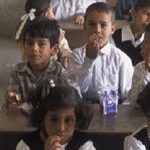
April 24th, 2018 2:00 pm to 4:00 pm Location: Holiday Inn Cairo Maadi| Cornish El Nile, Cairo, 11431 The IFPRI-Egypt Seminar Series is part of the United States Agency for International Development (USAID) funded project called “Evaluating Impact and Building Capacity” (EIBC) that is implemented by IFPRI. The seminar supports USAID’s Agribusiness for Rural Development and Increasing Incomes […]
News: Unleashing the Potential of Egyptian Farmers

Not all farmers are the same and they have different needs, so the policies and investments have to vary as well, wide data collection is therefore necessary to develop models that suit the different needs of farmers.
IFPRI Egypt Seminar: “Unleashing the potential of Egyptian farmers: key opportunities and policy options”

IFPRI, in collaboration with the International Center for Agriculture Research in the Dry Areas (ICARDA) is pleased to invite you to this seminar, with the objective of gaining a more systematic understanding of the diverse farm household characteristics and the key constraints associated with each type of farm household in Egypt. The seminar will also discuss...
Building the First Regional Social Accounting Matrix (SAM) for Egypt 2014/2015

Social Accounting Matrix (SAM) is a comprehensive and coherent socio-economic database that combines many datasets ranging from sectoral survey data, economic census, trade data, national accounts, government budget, direct and indirect taxes as well as subsidies. As such, it is considered as a representation for the economy, that shows the circular flow of all transfers and real transactions between sectors and institutions. Having a more disaggregated SAM with regards to activities, households, subnational regions is very important for economic analysis