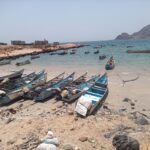
Fisheries in Yemen have suffered from years of conflict, underinvestment, weak regulations, and high fuel prices. Fish production has fallen by an estimated 40 percent from its peak in 2004. Before the recent conflict, fisheries were Yemen’s second-largest export sector and an important contributor to national GDP and foreign revenue earnings. Given rich fish resources in the Gulf of Aden and Arabian Sea, artisanal fisheries could be a key sector for economic recovery and food security in Southern Yemen, and international development partners and the private sector have recently made large investments in their infrastructure. However, reliable data are lacking on the current status and development potential of artisanal fishing, the efficiency of fish value chains, and consumer demand for fish.
MENA Launch of 2025 Global Food Policy Report (GFPR)
Over the past half century, global food systems have undergone profound changes in response to significant environmental, economic and social shifts. The Middle East and North Africa (MENA) region is no exception, with rapid political, demographic and environmental changes taking place over the past 50 years. IFPRI’s mission is to provide research and evidence to guide policymakers in charting a course through these changes.
BEP Seminar Series | Early Childhood Development: Nutrition and women’s Employment
The labor force participation rate for women in Egypt fell to 18% in 2023.[1] Among the major factors theorized to contribute to this low rate is women’s time spent on care work. While women’s childcare work is undervalued in national GDP accounting, early childhood is a critical stage in human development that shapes the trajectory for individuals’ health, learning, and overall wellbeing throughout their lives. This seminar will bring together completed and emerging research on drivers of women’s employment and time use on the one hand with research and policy discussion regarding early childhood nutrition, nurseries, breastfeeding, and early childhood education.
Policy Workshop Advancing Policy Innovation for Social Protection, Food, and Water in Egypt

The International Food Policy Research Institute (IFPRI) and the International Water Management Research Institute (IWMI) are convening a policy workshop that will gather government agencies engaged in shaping Egypt’s food, water and social protection policies.
BEP Seminar Series: Climate-smart agriculture and development practices in Egypt
Egypt stands at a critical juncture, facing significant environmental stresses exacerbated by climate change, despite being a relatively minor contributor[1] to global greenhouse gas emissions. The nation’s already hot and arid climate is experiencing increasing average temperatures, with projections indicating continued increases. Climate change significantly impacts Egypt’s agricultural sector[2], a vital contributor to the country’s GDP, foreign cash reserves, food security, and employment. Absent adaptation, rising temperatures, increased land salinity due to rising sea levels in the Nile Delta, limited surface water resources and rapid exploitation of groundwater resources will reduce agricultural productivity in the future.
- 1
- 2
- 3
- …
- 20
- Next Page »