Effective targeting strategies are vital for almost all development programs. Universal approaches which provide aid to all individuals regardless of need are not always feasible given limited budgets and varying development priorities. Conversely, targeting directs resources to those in greatest need, ensures efficient allocation while upholding principles of social justice, equality, and the right to assistance.
BEP Seminar Series: Climate-smart agriculture and development practices in Egypt
Egypt stands at a critical juncture, facing significant environmental stresses exacerbated by climate change, despite being a relatively minor contributor[1] to global greenhouse gas emissions. The nation’s already hot and arid climate is experiencing increasing average temperatures, with projections indicating continued increases. Climate change significantly impacts Egypt’s agricultural sector[2], a vital contributor to the country’s GDP, foreign cash reserves, food security, and employment. Absent adaptation, rising temperatures, increased land salinity due to rising sea levels in the Nile Delta, limited surface water resources and rapid exploitation of groundwater resources will reduce agricultural productivity in the future.
Launch of Climate Change Future Watch (CCFW)
Climate Change Future Watch (CCFW) is an online tool enabling users to explore potential climate futures for specific MENA countries until 2050. This platform calculates and produces forecasts detailing the consequences of diverse climate change scenarios on the agricultural sector, along with evaluating the efficacy of policy measures to mitigate these impacts. Utilizing variables such as production, yield, and area, the tool illustrates the forthcoming influence of climate change on various food commodities.
The Russia-Ukraine Conflict and Global Food Security
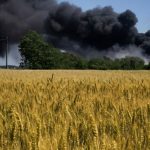
When Russia invaded Ukraine in February 2022, sparking fears of a global food crisis, IFPRI responded rapidly to the need for information and policy advice to address the crisis. From the first moments of the conflict, a new IFPRI blog series provided critical information and insights into the impacts on food security, caused by rising food, fertilizer, and fuel prices and trade disruptions, for vulnerable countries and regions.
National Wheat Day | 2-day workshop
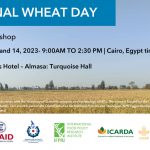
The Academy of Science, Research and Technology (ASRT) and the International Food Policy Research Institute (IFPRI) are organizing a workshop under the title of "National Wheat Day". The workshop will be held over two days, on February 13th and February 14th, at the St-Regis Al-Massa Hotel in the New Administrative Capital.
- 1
- 2
- 3
- …
- 8
- Next Page »