Cash transfer programs are often effective at increasing household consumption in their early years, but impacts become more nuanced over time as the use of transfers varies. This paper examines the medium-term effects of Egypt’s f lagship cash transfer program, Takaful, on several measures of household wellbeing using a regression discontinuity (RD) design
NEW PUBLICATION: Would you rather? Household choice between cash transfers or an economic inclusion program

We study households’ choice between continued cash transfers and a new economic inclusion program—two global prevalent social protection programs—offered by the Egyptian government. Lower-than-expected early adoption of the new program is correlated with differing perceptions on its design
Cash Transfers and Women’s Decision-Making in Egypt: Still a Man’s World
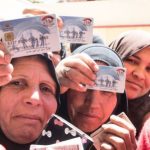
Cash transfer programs have become one of the most popular ways to reduce poverty in low-income countries and have made substantial strides in doing so. Recently, attention has turned to the design of these programs, such as whether to target transfers explicitly to women, as well as their impacts beyond household spending
NEW PUBLICATION: The Nutritional Benefits of Cash Transfers in Humanitarian Crises: Evidence from Yemen
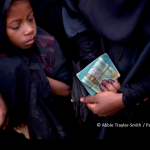
This study makes use of a cluster randomized control trial that was left in place when a pilot cash-plus intervention evolved during the civil conflict into a major program within the Yemen Emergency Crisis Response program. The results provide uniquely rigorous evidence of the potential for long-run nutritional benefits of cash transfers in humanitarian crisis settings.
NEW PUBLICATION: Supporting Egypt’s safety net programs for better nutrition and food security, inclusiveness, and effectiveness

Over the years, IFPRI’s research, with support from PIM since 2012, has informed important decisions on Egypt’s key safety net programs, including the food subsidy and the national cash transfer programs. This note summarizes some of the most recent outcomes of this work.