
the International Food Policy Research Institute (IFPRI) organized the MENA launch event of the 2025 Global Food Policy Report (GFPR) in Cairo, under the title: “Celebrating 10 Years of IFPRI Cairo Office: Informing Food Systems Policy in the MENA Region and Looking to the Future.”
NEW PUBLICATION | Fish for food security in Yemen: Insights from the Data in Emergencies survey
Fish is the most frequently consumed animal-source food in Yemen, apart from dairy. Fish consumption is highest in coastal southern Yemen but also very common in southern inland districts. Nine percent of households in coastal southern Yemen earned income from fishing. Earning fishing income is highly positively associated with consumption of fish or meat and with the frequency of fish or meat consumption. Sustaining fish stocks and fishing livelihoods is critical to food security and nutrition in southern Yemen.
The Nexus of Water, Food and Energy (NWFE): Entry points for Food System Action | Perspectives from Egypt
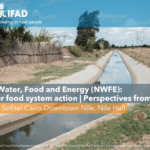
Water, energy and food security are important human development goals that are closely inter-connected. Food systems rely heavily on the availability of energy and high-quality water. This connection spans nearly every stage of production and agricultural value chains, including aspects such as labor and mechanization, agro-chemicals, cooling, and transportation.
One year of war in Gaza: Food emergency continues with no end in sight

With conflict in the Middle East now escalating into Lebanon and beyond, Palestinians in the Gaza Strip continue to face dire food security conditions. One year has passed since the October 7, 2023 Hamas attacks on Israeli civilians, triggering the Israeli military retaliation and war that have killed more than 41,000 Palestinians and devastated the livelihoods of Gaza’s population of over 2 million.
Bridging Evidence and Policy (BEP) Seminar Series: Crises and Response – Development and Humanitarian in the MENA

Vulnerable communities in the Arab world and MENA region face numerous challenges, including conflicts, resource scarcity, and inequality which exacerbate their situation. The COVID-19 pandemic, rising food prices due to conflicts, natural disasters, and ongoing conflicts in Yemen, Sudan, and Palestine further hinder development opportunities in the region
- 1
- 2
- 3
- …
- 20
- Next Page »