[available in English and Arabic]
The year 2017 was marked by increasing uncertainty amid mixed signs of progress. The world enjoyed a strong economic recovery, but global hunger increased as conflicts, famine, and refugee crises persisted. With the withdrawal of the United States from major international agreements, Britain's “Brexit,” and rising anti-immigration rhetoric in many countries, the world began to step away from decades of global integration that have yielded unprecedented reductions in poverty and malnutrition.
Land Scarcity in the MENA Region Threatens Food Security – perspectives from UNCCD’s Global Land Outlook
Jonathan Doelman, Researcher, PBL Netherlands Environmental Assessment Agency
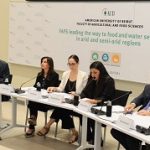
The Middle East and Northern Africa region will experience large population growth in the coming decades. Already today, land for agriculture relative to the population in many MENA region countries is very low compared to the rest of the world.
Building Capacity in Times of Conflict: Yemeni Experts Get Hands-On Training for Food Security and Nutrition
Rachel Bahn and Hagar El-Didi - American University of Beirut | IFPRI Egypt
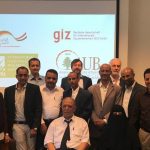
A group of 9 Yemeni experts affiliated with the Ministry of Planning and International Cooperation (MoPIC) traveled from Sana’a to Beirut, Lebanon to participate in targeted training on food security and nutrition from March 5-9, 2018. The training was delivered by a joint team from the International Food Policy Research Institute (IFPRI) and the American University of Beirut (AUB).
Going digital: The Climate-Smart Agriculture Sourcebook’s new dynamic interface
February 25, 2018 By: Rima Al-Azar, Senior Natural Resources Officer, FAO Climate-smart agriculture is an approach that helps unlock sustainable solutions in agriculture sectors impacted by climate change to ensure food security and nutrition. Originally published in 2013, the Climate-Smart Agriculture Sourcebook underwent a two-year revision process and on the Agriculture Action Day at the COP23, FAO […]
The Tamween Food Subsidy System in Egypt
January 29, 2018 By: Sherine Al-Shawarby, Vice Dean, Faculty of Economics and Political Science, Cairo University Over the many upheavals and spells of stability, Egypt’s policy makers have persistently prioritized food subsidies in an effort to achieve social equity and political stability. The recently published World Bank book The 1.5 billion People Question: Food, Vouchers, or Cash? includes […]
- « Previous Page
- 1
- …
- 7
- 8
- 9
- 10
- 11
- …
- 20
- Next Page »