
High food prices and supply disruptions triggered by the Ukraine war are hitting Middle Eastern and North African (MENA) countries like Egypt, Sudan, and Yemen hard, partly due their heavy dependence on wheat imports. But in the region, Lebanon—already in the midst of one of the world’s worst economic collapses since the 1850s—is uniquely vulnerable to food security impacts from the Russia-Ukraine conflict.
NEW PUBLICATION: The Russia-Ukraine Crisis: Implications for Global and Regional Food Security and Potential Policy Responses
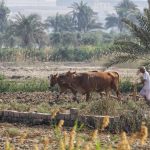
This paper analyzes the implications of the Russian-Ukraine crisis on global and regional food security. We start with a global vulnerability analysis to identify most vulnerable regions and countries. The Middle East and North Africa (MENA) region is particularly vulnerable to trade shocks because of its high food import dependence
The Russia-Ukraine Crisis Poses a Serious Food Security Threat for Egypt
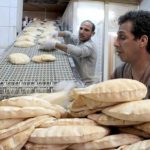
Russia's invasion of Ukraine has imperiled global food security—creating suffering within Ukraine and displacing millions, while disrupting agricultural production and trade from one of the world's major exporting regions.
NEW PUBLICATION: Cluster-Based Development in Egypt: A Study of External Shocks to the Leather and Medicinal and Aromatic Plant Sectors

The Egyptian government has prioritized the idea of cluster-based development-that is, the geographic concentration of specialized firms, such as in this case, those producing similar or related products. The establishment of such clusters, however, presents significant challenges, bottlenecks, and obstacles
NEW PUBLICATION: A study of Tunisia’s Leather and Date Sectors
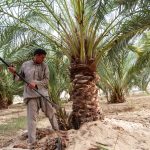
Based on field visits, structured interviews, and reviews of the literature and secondary data, we examine major challenges facing the leather and date clusters in Tunisia. The challenges vary greatly between the clusters. The leather and footwear industry faces a decline in external demand
- « Previous Page
- 1
- 2
- 3
- 4
- …
- 14
- Next Page »