
Egypt introduced the Takaful and Karama Program (TKP), a pair of targeted cash transfer schemes in March 2015. Takaful and Karama was designed as a conditional cash transfer program providing income support targeted to the poor and most vulnerable; namely poor families with children (under 18 years of age), poor elderly (aged 65 years and above) and persons with severe disability.
Cash Transfers and Women’s Decision-Making in Egypt: Still a Man’s World
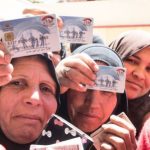
Cash transfer programs have become one of the most popular ways to reduce poverty in low-income countries and have made substantial strides in doing so. Recently, attention has turned to the design of these programs, such as whether to target transfers explicitly to women, as well as their impacts beyond household spending
NEW PUBLICATION: Political Economy of Wheat Value Chains in Post-Revolution Sudan
Flour and bread have played a central role in Sudan’s political economy throughout the country’s post-independence history. In 2019, increasing bread prices precipitated the protests that ousted the government of Omar al-Bashir
NEW PUBLICATION: Supporting Egypt’s safety net programs for better nutrition and food security, inclusiveness, and effectiveness

Over the years, IFPRI’s research, with support from PIM since 2012, has informed important decisions on Egypt’s key safety net programs, including the food subsidy and the national cash transfer programs. This note summarizes some of the most recent outcomes of this work.
IFPRI explores impact of COVID-19 on school feeding services and food insecurity

COVID-19 has disrupted programs that assist vulnerable populations worldwide. In addition to education, schools provide daily meals and other services that many families depend on; when schools closed during the pandemic, those services ceased. Kibrom Abay and colleagues explore the food security consequences of [...]
- « Previous Page
- 1
- 2
- 3
- 4
- …
- 6
- Next Page »