This policy note summarizes findings from a clustered randomized controlled trial (RCT) conducted in eastern Yemen to assess the impacts of subsidized solar powered drip irrigation systems on smallholder farmers’ production decisions and household food security
NEW PUBLICATION | Impact evaluation of a solar powered drip irrigation intervention in eastern Yemen
Groundwater irrigation supports agricultural production and local food security in arid regions, however costs and accessibility of fuel for pumping are a challenge in conflict-affected contexts. Solar-powered drip irrigation technology can support smallholder farmers in such settings.
Solar Irrigation in Yemen: Promising Impacts Several Months Post Implementation
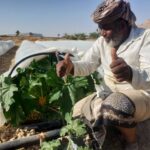
Technical support component of the intervention was in the form of technical training through agronomists and linking the beneficiaries with other market players such as input suppliers and microfinance institutions. Beneficiaries received technical training on the components and operation of solar-powered water pumps, including the different types available and their respective advantages and disadvantages, and the daily and periodic maintenance required to keep solar-powered pumps functioning optimally
What if We Could Bring Back Abandoned Irrigated Lands?
By: Andrew Noble, Senior Research Fellow, Stockholm Environment Institute Asia Centre, Thailand Publicly owned and managed large-scale irrigation systems (LSIS) dominate the Middle East, West and South Asian countries. LSIS globally comprise 130 million ha out of a total global irrigated area of 320 million ha, not an insignificant asset and investment. The estimated annual economic value with […]
Alternative options for economy wide policy managements: illustrations using CGE models for Tunisia and Morocco
January 13, 2016 By: Mohamed Chemingui- Senior economist and chief of Regional Integration UN-ESCWA Share URL Water constitutes the main constraining factor of agricultural development in Southern and Eastern Mediterranean countries and particularly in Tunisia and Morocco. The two countries are among the countries where the pressure on water resources is strong with an index of exploitation […]